
By Dr Neil Taylor
In our latest article, we take a closer look at why structural data delivers deeper value when analysed comprehensively rather than in isolation. Drug discovery generates a wealth of atomic-level information, yet its true power often remains untapped. Through Proasis, we show how curated structural datasets, interaction geometry searches and full crystallographic context enable researchers to identify meaningful patterns that standard approaches frequently miss.
Atomic-level structural biology data is one of the most valuable yet underutilised resources in drug discovery. The challenge isn’t generating data – it’s making that data accessible, interpretable and actionable for the medicinal chemists and structural biologists who rely on it.
Proasis was built around this principle. It organises curated protein, target, binding-site and ligand information into a unified structural biology platform where researchers can identify, classify and rank non-covalent protein–ligand interactions with precision. By structuring this information coherently, Proasis transforms datasets from passive repositories into active discovery tools, revealing patterns that cannot be seen through isolated, structure-by-structure analysis.
A long-standing rule in medicinal chemistry suggests that placing a polar group in an apolar environment is not energetically favourable. It is widely taught, frequently applied and rarely questioned.
Yet our analysis of the carbohydrate-binding protein Intelectin-1 showed a more complex reality.
By examining the protein-ligand complex using both standard and non-standard interaction parameters (effectively breaking our own rules) we uncovered polar–apolar contacts that contributed meaningfully to molecular recognition. The question was whether these were isolated exceptions or signs of a broader pattern.
The answer came from mapping interaction geometries across the entire Proasis database. This dataset-wide analysis, drawing exclusively on experimental structural information, validated these unconventional contacts. These were not anomalies; they were interactions that classical models had systematically underestimated. The same approach indicated potential desolvation penalties in geometrically constrained situations that standard scoring methods struggle to detect.
This is the power of comprehensive structural data analysis: it facilitates identification and validation of energetically significant interactions that single-structure examination can easily overlook.

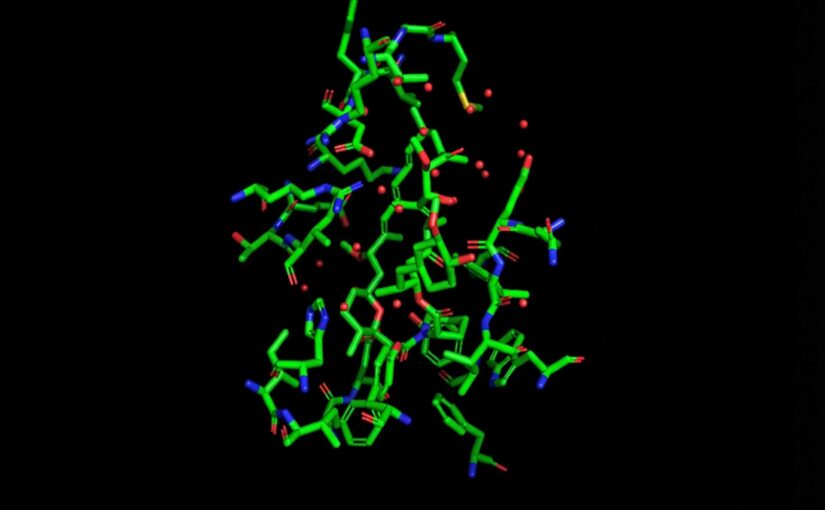
Figure 1. Experiments can be done with standard rules/constraints

Figure 2. ‘Break the rules’ – apply both less stringent parameters and more stringent parameters and see something different, additional favourable hydrogen bonding from carbon atoms to pi systems
Another challenge lies in how protein structures are commonly analysed. Standard workflows focus exclusively on the asymmetric unit (the portion of the model represented in the Coordinate Section of the structure file) but crystallography provides a far richer picture.
When symmetry mates (the neighbouring molecules in the crystal lattice) are incorporated, additional interactions often appear. These are genuine inter-molecular contacts that influence the observed ligand binding, geometry and even selectivity. Yet they are routinely excluded because accounting for them requires additional effort and specialised tooling.
Proasis resolves this by capturing the true ligand environment for every unique small molecule across all protein domains, in both the public PDB and in-house crystal structures. This includes:
This enables three-dimensional, context-aware interaction searches across all small molecules and protein domains. For drug discovery, the implications are substantial: improved selectivity assessment, clearer interpretation of interaction importance and more accurate structure-based design decisions.

Figure a. The Problem: standard analysis shows a simple protein ligand complex in the protein structure file

Figure b. The Reality: a more complete crystallographic picture reveals important contacts with a symmetry mate

Figure c. The Proasis Solution: Captures true ligand environments for every unique HET in every protein domain across both public PDB and in-house crystal structures
These examples highlight a broader principle at the core of our work at DesertSci. High-quality structural data is plentiful, but its scientific value multiplies when it is:
Our long-standing focus on protein–ligand interaction analysis, combined with a commitment to complete crystallographic context, allows Proasis to deliver insights grounded entirely in experimental data. Decades of structural biology expertise have been encoded into tools that make advanced analysis both accessible and rigorous.
The objective is not only to lower expertise barriers (although this is important) but to ensure reliable atomic-resolution therapeutic target data reaches the right researchers at the right time, enabling better design decisions and stronger hypotheses.
Our philosophy is simple: more eyes on better data leads to more discoveries. Structure determination produces high-value information; our role is to organise it, annotate it and make it searchable so researchers can retrieve, visualise, compare and analyse structures effectively.
Through overlay maps, automated interaction reports, design tools and API access, we’re putting analytical power directly into the hands of researchers. When assumptions can be questioned, unconventional findings validated across broad datasets and full crystallographic environments taken into account, drug discovery becomes more precise, more informed and more efficient.
“The data has always been there. We’re helping ensure it tells its full story.”

Dr Neil Taylor, founder of DesertSci, is a leading expert in protein structure data systems and structure-based drug design. Connect with him on LinkedIn to learn more.
Get in touch with us to discuss your organisation’s needs and to arrange a free demonstration of Proasis.